
No Comments
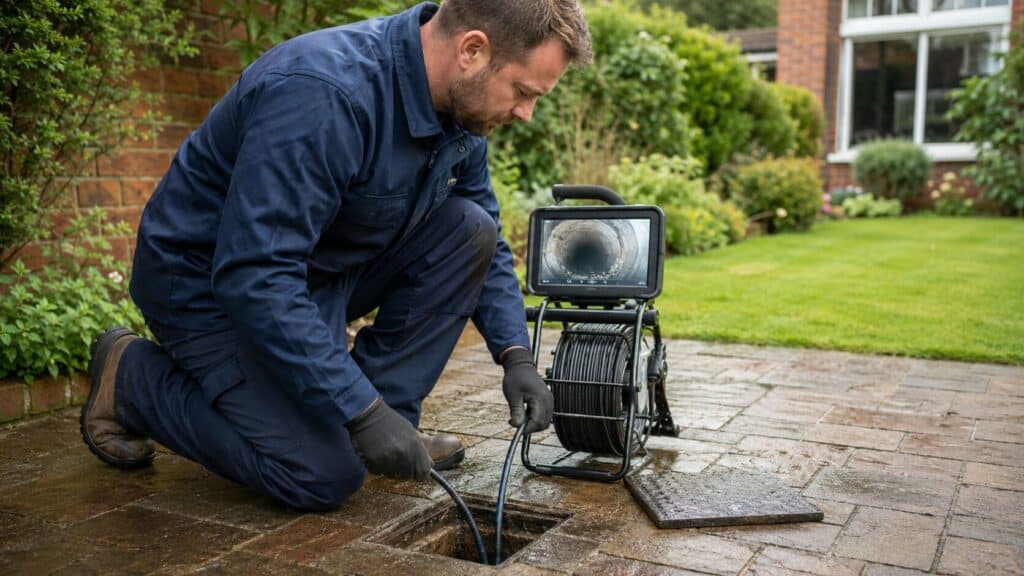
A blocked drain creates issues in the home without any clear warning at the start of the trouble. Water moves down the pipe in a gradual manner over days until the sink fills higher with waste and produces an odour that demands attention right away. People tend to try a plunger first before they move to a chemical product and finally contact help by phone. The act of calling a drain unblocker for drain repair Liverpool covers just part of the full situation at hand. The engineer examines the cause upon arrival and checks if that examination relies on supposition or solid proof which decides if the issue receives a real fix or experiences only a delay.
When the Drain Keeps Blocking, the Real Problem Is Below the Surface
The instinct is to treat a blocked drain as a simple, mechanical problem: something is in the way, you remove it, and done. That assumption costs homeowners money every year.
Fats, oils and grease are responsible for 37.5% of all reported blockages in the UK, according to a 2025 survey of drainage professionals conducted by the National Association of Drainage Contractors (NADC) and DrainSafe. Inappropriate items being flushed, wet wipes, nappies and sanitary products, account for a further 33.3%. The number that should concern every homeowner dealing with repeat blockages is this one: misaligned pipes now account for 12.5% of reported faults, up from 8.5% the year before. Root ingress is climbing too.
Clearing grease out of a pipe is straightforward. Clearing a blockage that keeps returning because the pipe joint has shifted is a completely different job. Without knowing which type of problem you are dealing with, the callout fee solves nothing permanent, particularly in cases involving blocked drains St Helens.
The Difference Between A Surface Blockage and A Structural Fault
A blockage rests near the surface inside the pipe and creates an immediate restriction to the flow of water. Equipment suited for the task moves the material aside so water passes freely once more and the work reaches completion at that stage. A fault in the structure presents an issue located in the pipe material with a crack or a joint out of position or a part that shows collapse. Debris moving through the system gathers at the point of concern in every instance. Clearing the area takes place during January and the same blockage returns in March without fail. The blockage serves as a sign of something larger rather than the main concern itself.
Identification of the blockage type influences every decision and shows which repair option justifies the expenditure involved, whether the issue affects drains Warrington or surrounding areas.
| Blockage Type | Common Cause | Does Jetting Fix It? | Likely Next Step |
| Grease and fat build-up | Cooking oils, kitchen waste | Yes, usually one visit | Behavioural change to prevent recurrence |
| Flushed wipes and solids | Wet wipes, nappies, sanitary products | Partially; may reblock | Mechanical clearance plus pipe check |
| Misaligned or displaced pipe | Ground movement, age, and poor original installation | No; clears but returns | CCTV survey to confirm fault location, then lining or repair |
| Tree root ingress | Roots entering pipe joints or cracks | Temporarily; roots regrow | CCTV to assess the extent, then lining or excavation |
| Collapsed pipe section | Structural failure, subsidence, vehicle loading | No | Excavation and replacement |
| Residual silt and debris | Gradual build-up in low-flow sections | Yes | Periodic maintenance jetting |
Why Recurring Blockages Are A Warning Sign, Not Just Bad Luck?
- Grease along with food debris reacts positively to jetting at pressure so one visit from the engineer often meets the need in full.
- Wipes flushed down the system together with solid items call for clearance by mechanical means and require changes in habit to stop the return of the issue.
- Pipes that sit out of alignment or show displacement cause blockages to come back as debris gathers at the joint and only repair to the structure brings resolution, a situation often encountered during drain repair Liverpool.
- Ingress from tree roots in drains leads to regrowth once removal takes place and the depth of entry decides if lining or excavation provides the solution.
- Sections that have collapsed resist all efforts with jetting so repair through physical work stands as the necessary step.
What a Drain Unblocker Actually Does on a Callout?
A blockage rests near the surface inside the pipe and creates an immediate restriction to the flow of water. Equipment suited for the task moves the material aside so water passes freely once more and the work reaches completion at that stage. A fault in the structure presents an issue located in the pipe material with a crack or a joint out of position or a part that shows collapse. Debris moving through the system gathers at the point of concern in every instance. Clearing the area takes place during January and the same blockage returns in March without fail. The blockage serves as a sign of something larger rather than the main concern itself.
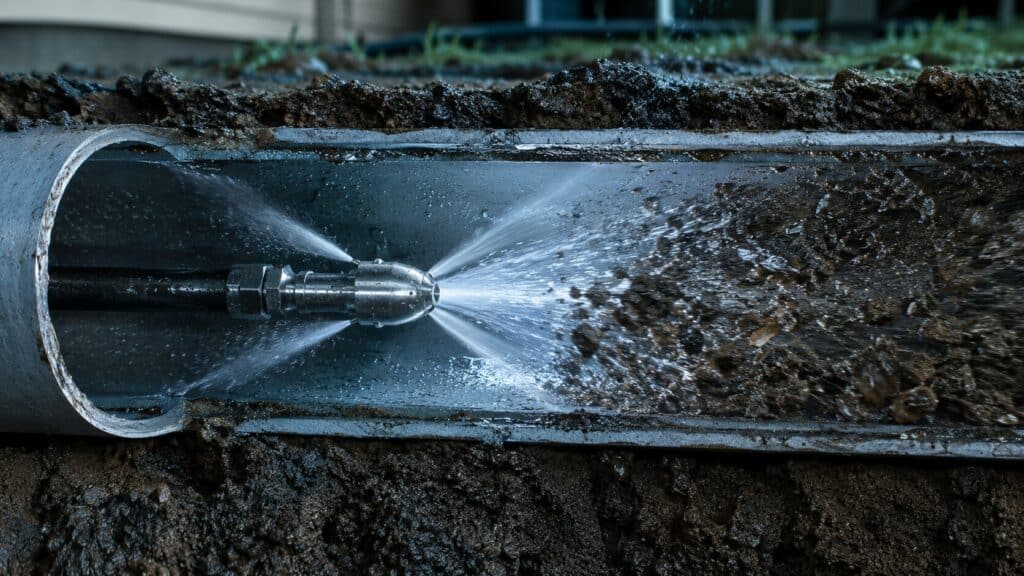
Mersey Rod delivers service to Liverpool and Merseyside across a period that exceeds twenty-five years and applies water jetting at pressure as the approach in every callout for homes and business premises, including work involving blocked drains St Helens. Each engineer who works on the team possesses a certificate from the Water Jetting Association known as the WJA which stands as the qualification in the UK for jetting activity. The WJA started publication of codes for practice in the industry in 1982 and the Health and Safety Executive notes those standards which establish the level that distinguishes engineers with training from those without qualification.
First on The Job: Assessment Before Action
The engineer locates the point of access and reviews signs that show the blockage type then selects the method before any equipment enters the drain, whether inspecting drains Warrington or elsewhere in the region. Application of the unsuitable fix to the issue that needs resolution follows from haste during this step of the work.
What Happens When the Blockage Clears but The Problem Does Not?
Jetting removes material from the drain and the fault returns inside a period of weeks so the sequence offers information for diagnosis on its own. The blockage comes from a source in the structure of the pipe. One clearance of the line falls short of the requirement and the engineer must establish the condition inside the pipe through examination instead of reliance on supposition, which is why a CCTV drain survey Warrington is often the next logical step.
That is where CCTV comes in.
What the Camera Sees That Jetting Cannot?
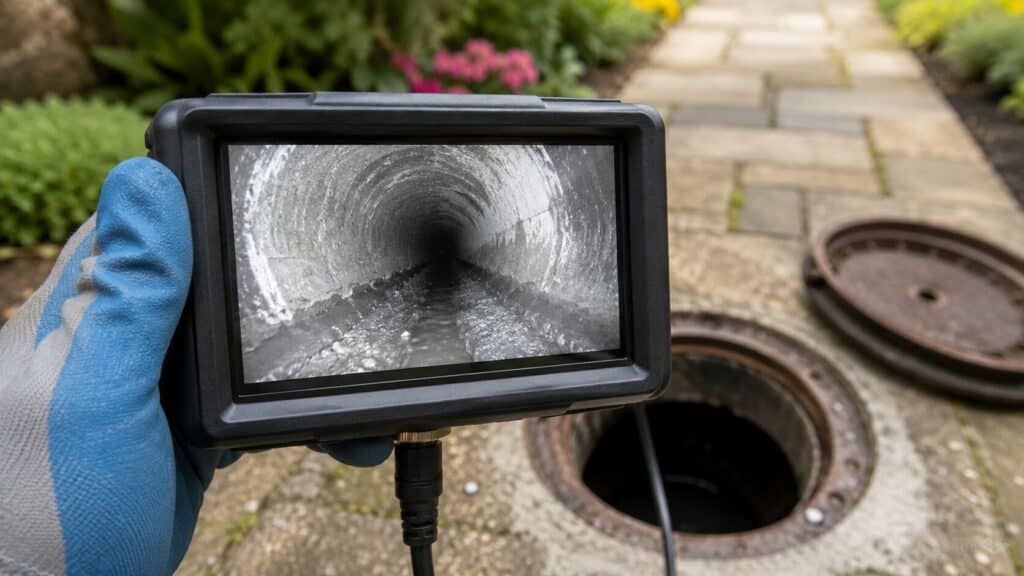
A survey that uses CCTV serves as the method of diagnosis and reveals the reason for repeated blockage in the drain plus the presence of cracks in the pipe or penetration by roots and the position of damage below ground level, making a CCTV drain survey Warrington especially valuable where recurring faults are suspected. Digging receives no requirement during the process of discovery. The inspection proceeds without invasion of the site. A camera passes through the drain from an access point that already exists. The engineer observes footage as it arrives on a monitor positioned at ground level and captures the complete inspection through recording. Completion of the survey leads to delivery of the video to the property owner together with a report in writing that covers the type of fault and its location along with recommendations for action if any action is necessary.
What the Camera Actually Sees: A Guide to Common Findings?
What shows up on a drainage survey covers a wide range of faults, some obvious, some genuinely surprising to homeowners who assumed the pipe was just dirty:
| Service | Best Suited For | Equipment Used | Available 24/7 |
| High-pressure jetting | Residential and commercial blockages, grease, wipes | Jetting unit with specialist nozzles | Yes |
| CCTV drain survey | Diagnosing recurring or unknown faults | Push-rod or crawler camera system | Yes |
| Drain lining | Cracked, fractured or displaced pipes without collapse | Resin liner inserted via access point | No (planned work) |
| Excavation and repair | Collapsed pipes, severe structural failure | Dig equipment; up to 3.8m depth | Emergency only |
| GPS drain mapping | Commercial sites, build-over surveys, complex layouts | GPS surface locator linked to the camera | No (planned work) |
| JetVac tanker | Heavy commercial blockages, gully clearance | Combination jetting and vacuum unit | Yes |
| Rodent ingress survey | Properties with confirmed or suspected vermin access | CCTV camera with detailed reporting | No (planned work) |
| Grease trap cleaning | Commercial kitchens, food businesses | Vacuum tanker and specialist equipment | No (scheduled) |
Why Camera Evidence Matters Before Any Repair Is Agreed?
Without footage, a repair is partly a guess. The engineer knows roughly where the fault is and roughly what type it might be, but the camera removes the “roughly” from both. It gives a precise location within the system and a confirmed fault type. That precision changes the cost, the method and the time required for the repair. Digging in the wrong place is expensive. Recommending a patch liner for a section that actually needs excavation is worse. CCTV evidence is not a precaution; it is the basis on which a competent repair decision gets made.
Five Situations Where a CCTV Survey Is the Right Call
Not every blocked drain needs a camera. A first-time blockage with a clear cause, a kitchen drain clogged with cooking grease after a few months of heavy use, is likely resolved through a single jetting visit by experienced local drain unblockers. Certain situations make a survey not just sensible but the only logical next step.
Recurring Blockages: The Clearest Signal That Something Is Wrong Beneath the Surface
If the same drain has needed clearing two or more times within a twelve-month period, that is not bad luck. The physical condition of the pipe needs checking, particularly where repeated issues involve drain repair Liverpool. A survey either confirms the drain is structurally sound and the blockage was user-related, or it identifies the fault that keeps generating the problem. Either outcome is useful.
Before Buying A Property: What Homebuyers Need to Know
Drainage condition is almost never covered by a standard homebuyer survey. The structural report checks the walls, roof, and floors; what runs beneath the garden and under the foundations is a separate question entirely. Drainage problems at a property you have just bought become your problem the moment contracts are exchanged.
Other situations where a CCTV survey is the right decision:
- Slow drainage across multiple outlets in the property simultaneously.
- Persistent unpleasant smells from outdoor drains or from toilets, a common concern reported for blocked drains St Helens.
- The property sits on a street with mature trees or has older clay pipework.
- An extension or building project requires confirmation of where drains Warrington or other underground drainage routes run beneath the ground (a build-over survey).
- A pest controller or estate agent has flagged possible drainage issues during an inspection.
What the Survey Report Tells You and What Comes Next?
The value of a CCTV survey depends on the report that comes after the inspection takes place. The report prepared in full supplies the property owner with complete documentation that includes the video file plus a written description of each fault found and its location in the system along with recommendations for the next action. The outcome shows no requirement for urgent steps in a number of situations. The drains exist in a condition that supports function and the blockage occurred as a single event which receives confirmation from the footage. Clarity from the process delivers value in practice because it removes the possibility of repairs that involve cost when those repairs hold no necessity and it provides the property owner with a record of the condition as a starting point, helping those searching for drain services near me make informed decisions.
Where faults are found, the survey determines the repair method. Minor pipe displacement or a crack at a single joint may be addressed through drain lining, which involves inserting a resin-impregnated liner that bonds to the interior of the pipe without any excavation. The liner seals cracks, bridges displaced joints and restores flow capacity. Collapsed sections or severe structural damage are a different matter; localised excavation is unavoidable, though experienced engineers target the minimum area necessary rather than opening up long runs of ground unnecessarily.
Drain Lining Versus Excavation: How the Survey Guides the Decision
The difference between a lining job and an excavation job can be tens of thousands of pounds, particularly on a commercial site. CCTV footage makes that distinction accurately and early, before any contractor has committed to a particular method.
GPS Drain Mapping and What It Adds for Larger Properties
On commercial sites or older residential properties with complex layouts, GPS mapping can be added to the CCTV process. Engineers mark the precise location of each section of pipework above ground as the camera travels through the system beneath it, producing a scaled plan of the entire drainage network. For property managers dealing with multiple tenancies, or businesses planning groundworks, that documentation saves significant time and cost later.
Mersey Rod carries out the full process from end to end: initial unblocking, CCTV survey, drain lining, patch repair and full excavation where necessary, all quoted at a fixed price before work begins. As a family-run business that started with a single van over 25 years ago and now operates seven days a week across the North West, the approach is built on giving property owners accurate information rather than maximising the scope of a callout.
Commercial Drains and Why the Diagnostic Approach Is Different
Commercial drainage systems are larger, under a more consistent load and far less forgiving when they fail, requiring specialist drain unblockers Southport for many complex commercial environments. A restaurant, a retail unit, a car park or a multi-tenancy block each generates different waste patterns, different blockage types and very different consequences when a drain goes down during trading hours.
The diagnostic process is fundamentally the same as residential work, but the scale and equipment change significantly. Larger-bore commercial pipes require crawler-style camera systems rather than push-rod cameras. The crawler is a motorised unit that travels independently through the pipe, sending back footage from pipes that a push rod could never reach. GPS mapping is often essential on commercial sites because drainage layouts are rarely straightforward and original drawings are frequently out of date, inaccurate or simply not available.
Grease Traps and Commercial Kitchens: A Specific Blockage Risk
Commercial kitchens generate grease in quantities that exceed the capacity built into drainage systems for domestic use. Installation of grease traps takes place to catch the material prior to entry into the main drain line and the traps need inspection along with cleaning at regular intervals to maintain operation. Failure occurs in a grease trap that receives neglect and the effects travel to sections further in the system without delay, making experienced drain unblockers Southport invaluable for commercial maintenance.
JetVac Tanker Services: When Water Jetting Alone Is Not Enough
Vacuum tankers enter service for blockages in commercial settings that sit at greater depth or for gully drains in large car parks and cases where the amount of material surpasses the removal capacity of a jetting unit. The tanker operates with jetting at pressure and suction at the same time which clears the pipe and takes away the debris during one procedure. The approach serves as the option of final resort for blockages of serious scale in commercial properties and it explains the resolution of drainage jobs that appear impossible from street level through a single visit to the site.
Mersey Rod is doing commercial drain surveying and clearance across Liverpool, Wirral, Warrington and Southport, providing drain unblocking Wirral services alongside specialist support from drain unblockers Southport for routine maintenance surveys to rodent ingress inspections, where CCTV footage is used to identify the exact entry points through which vermin are accessing a building. Their commercial survey service includes GPS mapping, full video documentation and written reports designed to meet the requirements of facilities managers and commercial landlords.
For any blocked drain that has come back more than once, or any property where the drainage history is unknown, the camera is not an optional extra. It is the difference between fixing the problem and paying to defer it, particularly where professional drain unblocking Wirral services are required to resolve recurring issues.
FAQs
Why Does My Drain Keep Blocking Even After It Has Been Cleared?
Sometimes a stubborn drain clog is not caused by grease or debris, it might just be something else. If the blockages are returning because of structural problems, such as cracked, misaligned or collapsed pipes, or because of tree root intrusion, they may need to be fixed before the blockage can be remedied.
What Is A CCTV Drain Survey?
The CCTV drain survey Warrington involves using a special camera in the pipework to examine the interior of the drain. Saves digging up the crust and exposes areas of cracks, root entry, collapsed sections or split joints.
When Should I Get A CCTV Drain Survey?
In situations of recurring blockages, persistent bad odours, drainage problems at more than one outlet, or when purchasing a property, drain unblocking Wirral specialists often recommend a CCTV survey to locate the underlying cause.
Can High-Pressure Jetting Fix Every Blocked Drain?
Certainly, high-pressure jetting works excellently in cleaning up grease, silt and debris, but it isn’t going to solve structural issues such as damaged, collapsed or misaligned pipes.
What Happens After A CCTV Drain Survey?
Once the survey is completed you will receive a video recording of the work as well as a written report with an explanation of any faults you have identified, where they are located, and the recommended option to fix the fault, giving drain unblockers Southport and property owners clear evidence for the most cost-effective repair.