
No Comments
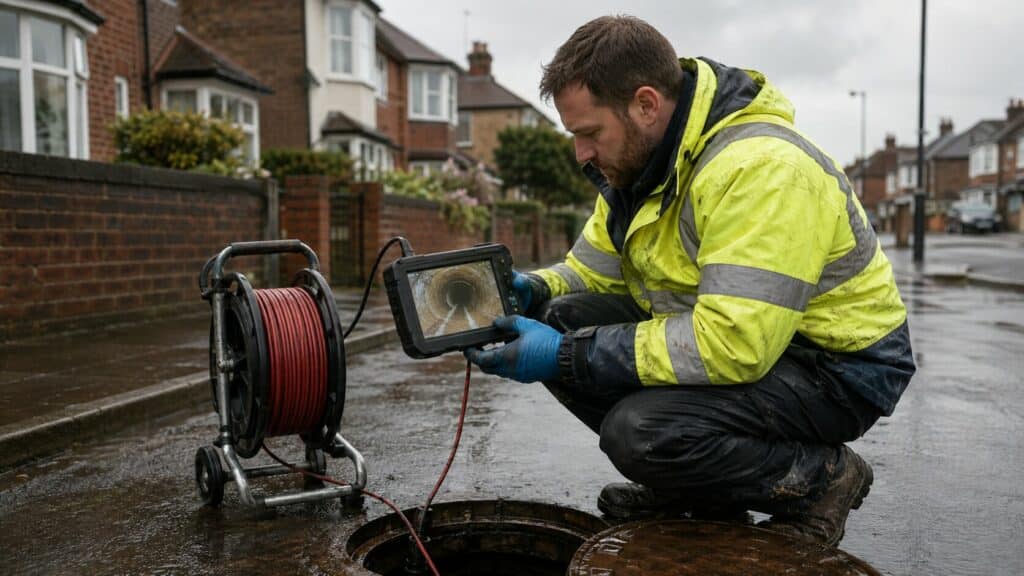
Conducting a drain survey can be very useful in preventing any flood situations. Most property owners are unaware of the importance of conducting a CCTV drain survey until something happens. Through a drain survey, property owners will know about the condition of their drains before the rain pours through an inspection of the pipes beneath the ground. Surveys also identify whether pipe sizes and gradients can handle real stormwater volumes, not just normal household flow. For residential and commercial properties across the UK, the question is rarely whether a drain survey is worthwhile; it is whether one is arranged before a problem becomes an emergency, especially with experienced local drain unblockers.
When the Numbers Already Tell the Story?
Surface water flooding is not a fringe risk. According to the National Flood Risk Assessment done by the Environment Agency in December 2024, 4.6 million homes in England are exposed to surface water alone and a 43% rise on 2018 numbers, which climate change forecasts will increase to 6.1 million by the middle of the century.
Surface water flooding refers to rain that does not drain quickly enough. Not rivers breaking their banks. Rain sitting on the ground because the pipes beneath a property are blocked, broken, or simply undersized for the volume they need to shift. What makes this particularly relevant for homeowners is that private drainage conditions sit within their own control in a way that council-managed flood defences do not.
| Risk Source | Properties at Risk (2024) | Projected Mid-Century Risk |
| Surface water | 4.6 million | 6.1 million |
| Rivers and sea | ~2.4 million | ~3.1 million |
| All sources combined | 6.3 million | ~8 million |
A blocked private lateral feeding into an already-strained public sewer during heavy rain does not just affect one property. It worsens the pressure on the wider network. Private drainage conditions and public flood risk are connected, even when they look like separate problems.
What the Camera Actually Finds?
A CCTV drain survey is not a peek down a manhole. A remote-controlled camera travels the full drainage run from the access point to the public sewer connection, returning live footage of everything inside the pipe. Every defect is logged, graded by severity, and documented in a written report with timestamped footage referenced to its location in the run. This approach to drain surveying gives property owners a detailed understanding of underground conditions.
The grading matters more than the footage. Operational failures such as blockages and partial restriction caused by grease or silt buildup can usually be solved with one high-pressure jetting. Structural failures are in another league; they include cracked walls, loose joints, or collapsed sections. Those require lining, patch repair, or excavation depending on how far the damage has progressed. A survey report tells the property owner which situation they are in before any money is committed to fixing it.
| Fault Type | Common Cause | Direct Flooding Risk |
| Accumulated blockage | Grease, silt, wipes, root debris | Pipe overflows in moderate rain |
| Collapsed or fractured pipe | Age, ground movement, vehicle loading | Water backs up toward the property |
| Tree root intrusion | Roots enter hairline cracks and grow | Progressive restriction, eventual pipe failure |
| Flat or reversed gradient | Ground settlement over years | Standing water inside pipe, repeated blockages |
| Misconnected drain | Poor installation or post-build alterations | Back-pressure, reduced total system capacity |
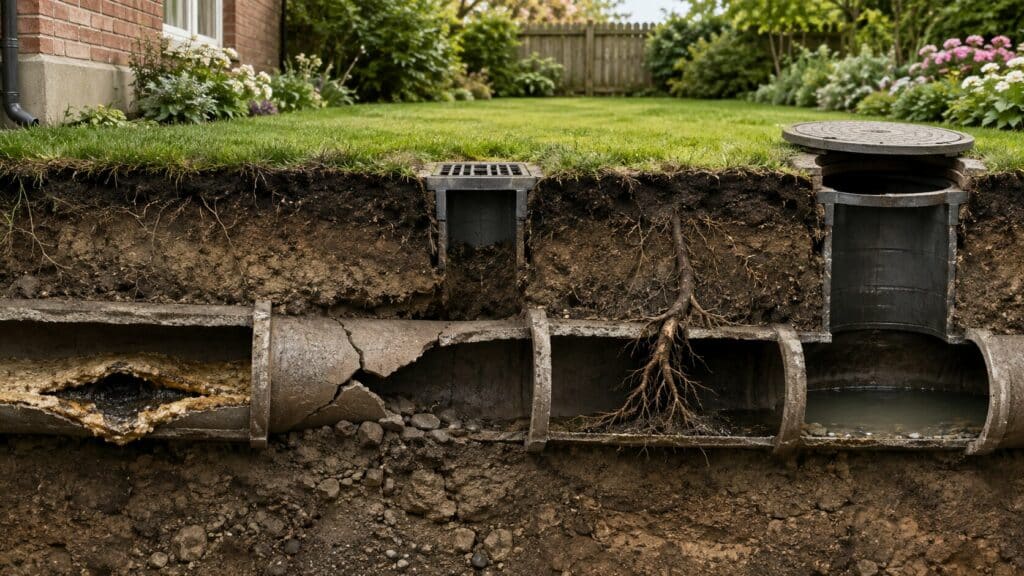
Five Faults a Survey Catches Before the Rain Does
- Hidden blockages do not announce themselves. Grease from kitchen drains, silt washed in from garden gullies, sanitary products that should never have entered the system; these accumulate incrementally, and a pipe can shed a significant portion of its throughput capacity while draining adequately in dry conditions. The first heavy autumn downpour removes whatever margin remained.
- Cracked or collapsed sections behave like internal dams. Movement of the ground caused by construction close by, repeated pressure of the weight of vehicles on top of shallow buried pipes, or just the ageing of the clay pipes that have been buried for decades; these all lead to cracking and narrowings and ledges for more buildup. By the time water backs up into a property, that failure has usually been forming for years.
- Tree root intrusion is the most underestimated fault on this list. Root systems follow moisture into the smallest crack, and once inside a pipe they do not stay small. A root mass that starts as a hairline obstruction can grow to block the full bore of a standard domestic pipe within a few seasons. Nothing at surface level shows it happening.
- A flat gradient is less noisy and also more prevalent in older properties due to ground settling that over time has changed the gradient of the pipes. The water remains in place, silt settles in one place, and the homeowner attributes the blockages to misfortune rather than a structural problem.
- Mistaken connections occur in houses that have been extended or have their kitchens redone where there was no supervision in making changes to the drainage. The entry of surface water into the foul drain or vice versa causes the pressure inside the drain to be less than its capacity.
Timing a Survey Correctly
Before autumn is the practical answer. A partial blockage that has sat through a dry summer meets the season’s first sustained rain in a weakened state, and clearing it in September costs considerably less than remediating a flooded ground floor in November. Many homeowners searching for a drain service only act after problems develop, when earlier intervention could have prevented damage.
Specific triggers that shift a survey from optional to necessary:
- Multiple fixtures draining slowly at the same time across different parts of the property.
- Gurgling from toilet pans when washing machines or sinks empty.
- Garden pooling that persists for hours after moderate rainfall.
- Foul odours from outdoor manholes or gullies during or after rain.
- Mature trees within three to four metres of known drainage runs.
- Planned groundworks or excavation on or adjacent to the property.
- Pre-purchase inspection of any older property.
Mersey Rod has been attending drainage callouts across Merseyside, Greater Manchester, Lancashire, and Cheshire for over 25 years. The pattern the company’s engineers report is consistent: properties that flood in heavy rain almost always carry pre-existing fault signs that a CCTV drain survey Liverpool specialist would have found months earlier. Their residential and commercial survey service produces a full graded defect report, giving property owners an accurate underground picture without guesswork or unnecessary digging. The team also assists customers with unblocked drains Wirral and maintains drains Liverpool to reduce the risk of recurring flooding.
Acting on the Report
Diagnosis without action is just paperwork for any local drain unblockers. The report’s value sits in what it enables. An operational clog is rectified through jetting in one sitting, whereby the pipe is unclogged, cleaned out, and checked once more using a camera for confirmation. On the other hand, a structural problem takes a longer course; pipe relining and patching will solve problems of broken pipes and misaligned joints without the need for digging in most scenarios.
This economic rationale is pretty straightforward. According to the Association of British Insurers, the cost of insurance claims on account of weather damage to homes in the UK rose to £585 million for the year 2024, with claims in the first quarter of 2025 already 55% higher compared to the previous quarter in the year before. A jetting clearance following a survey does not, particularly when carried out by experienced local drain unblockers.
Insurance policies are also scrutinising drainage maintenance history more carefully. A professional survey report produced before a flood event supports a claim and demonstrates reasonable precaution. One produced after the fact is considerably less persuasive.
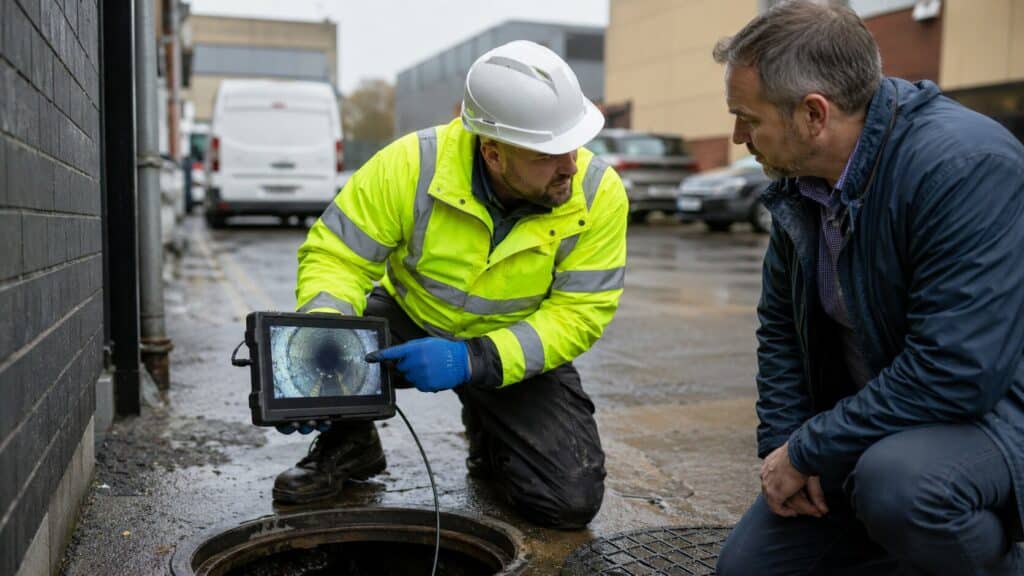
Commercial Properties and Landlords
Commercial drainage carries a different risk profile. Higher volumes, grease from catering operations, and vehicle loading above shallow pipe runs accelerate wear in ways residential systems rarely face. A commercial drain that has not been inspected in two or three years is a meaningful liability, not a maintenance oversight. Businesses facing a blocked drain St Helens issue often discover that routine inspections would have identified the underlying fault much sooner.
Landlords hold a specific duty of care regarding drainage conditions on tenanted properties. Recurring drainage failure causing flooding to a tenant creates potential liability, and a property with no maintenance record is difficult to defend in a dispute. A CCTV survey at lease commencement creates a documented baseline that protects both parties, while arranging a drain service near me can help keep maintenance records up to date.
Mersey Rod provides CCTV drain surveys and GPS drain mapping for commercial clients across the North West. All engineers hold Water Jetting Association (WJA) certification, and the company carries CHAS accreditation, giving commercial clients confidence in both the technical standard and the safety record of the contractor, with support from trusted local drain unblockers.
Frequently Asked Questions
Does A Drain Survey Mean The Property Is Guaranteed Against Flooding?
Not really. The drain survey finds problems that may exist in the property’s private drainage network, making sure that the pipes run to their full capacity. It cannot regulate how much rain falls or if the sewers are healthy.
How Often Should A Drain Survey Be Performed?
Once every three to five years in normal circumstances. Property that has mature trees near the drainage runs or older pipes needs a survey more often. Commercial and rental property need annual surveys.
How Are A Drain Survey And A Drain Clearance Different?
A clearance clears a recognised obstruction by means of high-pressure jetting. A survey entails inspection of the entire interior of the pipe with a camera to produce an assessment of the defects. One treats the problem; the other determines whether the problem is structural.
Is Home Insurance Enough To Cover A Drain Survey?
Some buildings insurance may have drainage cover; you will need to check your policy. A drain survey conducted before a flood is much more helpful than one done after.
How Do You Know If A Slow Drain Needs A Full Survey?
A single slow fixture usually points to a localised internal issue. When multiple fixtures across the property drain slowly at the same time, or outdoor gullies are slow after rainfall, the restriction is likely in the main drain run and warrants camera inspection.