
No Comments
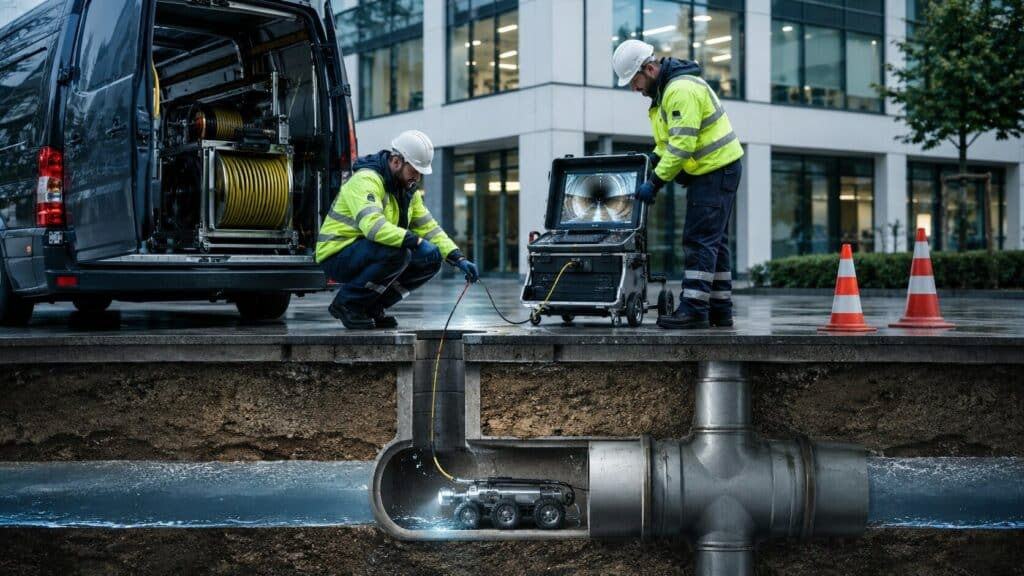
Commercial drainage systems are designed to handle significantly higher volumes of wastewater and a wider range of materials than domestic drainage systems. Restaurants put grease and organic waste through their pipes constantly. Industrial sites deal with heavier sediment. Hotels manage high-volume wastewater around the clock. Over time, all of that takes a toll, and the consequences of failure are considerably more serious than a slow drain at home.
There’s also a compliance angle that often gets overlooked until something goes wrong. Commercial property owners and facilities managers carry legal responsibilities around commercial drainage maintenance, sanitation, and health and safety. Regular Drainage Inspections are part of meeting those responsibilities. They’re also part of what keeps insurers satisfied and regulatory obligations met.
Common Drain Problems Found During Commercial Drainage Inspections
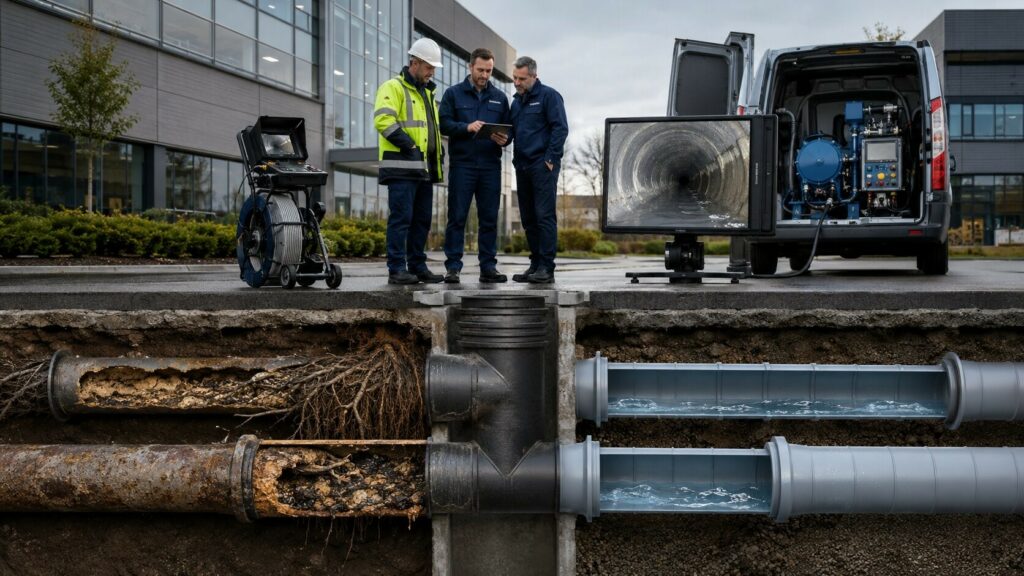
Grease and fat accumulation is probably the most consistent findings in food service premises. It builds up gradually on pipe walls, narrowing the internal diameter until flow is seriously restricted. By the time there’s an obvious blockage, the accumulation is often substantial and much harder to remove than it would have been if caught six months earlier.
Tree root intrusion is also prevalent on older commercial property sites where drainage is located under existing landscaping. Roots do not cause trouble in a single day but will work relentlessly after they have caught hold. Cracked pipes, corroded sections, displaced joints, and pipe sections that have sagged under the weight of surrounding ground are also frequently identified during inspections, often in properties where the drainage system simply hasn’t been looked at for years.
Scale build-up, collapsed sections, foreign object blockages, and joint failures make up the rest of the picture. None of these is a dramatic discovery during a scheduled inspection. All of them become dramatic when they’re discovered during an emergency call-out at 11 pm on a trading night.
5 Key Benefits of Scheduled Drainage Inspections:-
Prevents Unexpected Business Disruption:
Drainage failures during operational hours create immediate problems, such as kitchen shutdowns, facility closures, and disruption to staff and customers. Scheduled Drainage Inspections catch developing issues before they reach that point. Repairs get planned and carried out at a convenient time, not scrambled together under pressure while the business sits idle.
Saves Money on Major Repairs:
Emergency call-outs carry premium costs, especially out of hours. Structural repairs on pipes that have been failing for months are more involved than they’d have been earlier. Add in the cost of business downtime, and the picture gets worse. Scheduled inspections interrupt that pattern. The maintenance cost is predictable, the repairs are simpler, and the expensive emergencies are far less likely.
Protects Employee and Customer Safety:
Overflowing drains, flood risk, contaminated surfaces, persistent odours, none of these belongs in a commercial property, and all of them can arise from a drainage system that isn’t being maintained. Routine Drainage Inspections reduce these risks directly and help maintain conditions that are acceptable for everyone on site. That matters beyond just operational comfort; it’s a basic duty of care.
Extends the Lifespan of Drainage Systems:
Replacement of drainage infrastructure costs are high. Well-maintained systems last, and those that are ignored when they aren’t working last. Removing small quantities of debris before they become a problem, fixing small cracks before they collapse, stopping root infestation from spreading, etc., will all decrease the long-term stress on the pipework and allow the system to stay in service for much longer.
Helps Businesses Stay Compliant:
Health and safety laws, insurance requirements and specific regulations for the industry all impose responsibilities for maintaining drainage. Regular Drainage Inspections provide a maintenance history that is documented and can contribute to compliance and minimise exposure in the event of an incident.
What Happens During a Professional Drainage Inspection?
Mersey Rod structures commercial drainage inspections to cover every relevant element of the drainage network, not just the sections that are obviously problematic.
Initial System Assessment
Engineers review the drainage layout, identify key access points, and establish which runs carry the highest load and therefore the highest risk. Larger commercial sites sometimes have drainage networks that haven’t been fully mapped, and getting that picture right at the start shapes everything else.
CCTV Camera Inspection
Cameras go through the underground pipe network, transmitting live footage that engineers assess for blockages, structural defects, and signs of deterioration. Surface-level checks miss too much; the camera shows what’s actually happening inside the pipe. Businesses looking for CCTV Drain Surveys St Helens can benefit from this detailed approach, helping identify hidden drainage issues before they develop into costly repairs.
Problem Identification
Anything found gets documented with its location and an assessment of severity. Some issues need immediate attention. Others need monitoring. The report distinguishes between the two clearly so that maintenance decisions are prioritised correctly.
Reporting and Recommendations
Property managers and facilities teams receive a clear report of findings, along with specific recommendations. No vague suggestions if something needs fixing; the report says what and why. If something can wait until the next inspection, that’s stated too.
Preventative Maintenance Advice
Based on what the inspection finds, Mersey Rod recommends an appropriate inspection frequency going forward. High-use premises typically need more regular visits. Lower-risk properties may be fine annually. That recommendation is based on actual site conditions, not a one-size-fits-all schedule.
When Should Commercial Properties Schedule Drainage Inspections?
Inspection frequency should reflect how hard the drainage system is working. Restaurants and cafes where grease load is high, and the consequences of failure are immediate, benefit from Drainage Inspections every three to six months. Hotels and industrial sites, with their varied wastewater demands, are well-served by six-monthly visits. Offices, warehouses, and schools can generally manage with annual inspections provided there are no recurring issues.
But certain situations justify getting an inspection regardless of where you are in the cycle. Before purchasing a commercial property, a drainage inspection tells you the condition of the infrastructure that standard surveys tend to overlook. After any flooding incident, an inspection confirms whether the drainage system has sustained damage. And any pattern of recurring blockages is a sign that something structural needs investigating; repeated clearing without addressing the root cause just defers the inevitable. In these situations, working with a professional Drain Unblocker Company ensures the underlying issue is identified and resolved rather than repeatedly treating the symptoms.
Why Choose Mersey Rod for Commercial Drainage Inspections?
Mersey Rod brings hands-on commercial drainage experience to every inspection, with advanced CCTV technology and engineers who’ve worked across a wide range of property types and sectors. Fast scheduling, clear reporting, and practical recommendations make the process straightforward for facilities managers and property owners who need actionable information without unnecessary complexity.
The service covers both scheduled maintenance programmes and responsive support when problems arise between planned visits. If inspections reveal severe blockages, Mersey Rod’s Drain Unblocking Services can restore proper flow quickly and efficiently. Businesses searching for a reliable Drain Unblocker Company can rely on Mersey Rod for both preventative maintenance and emergency support. Mersey Rod also provides professional CCTV Drain Surveys St Helens services to help businesses identify hidden drainage issues before they escalate.
Conclusion
Scheduled Drainage Inspections aren’t an overhead; they’re a straightforward way to avoid the far higher costs that come with drainage failures, emergency repairs, and operational disruption. The maintenance bill is predictable. The emergency bill isn’t.
Commercial property owners and facilities managers across Merseyside can arrange regular drainage inspections with Mersey Rod to keep their drainage systems performing reliably throughout the year. Don’t wait for something to fail before finding out what’s been developing underground.