
No Comments
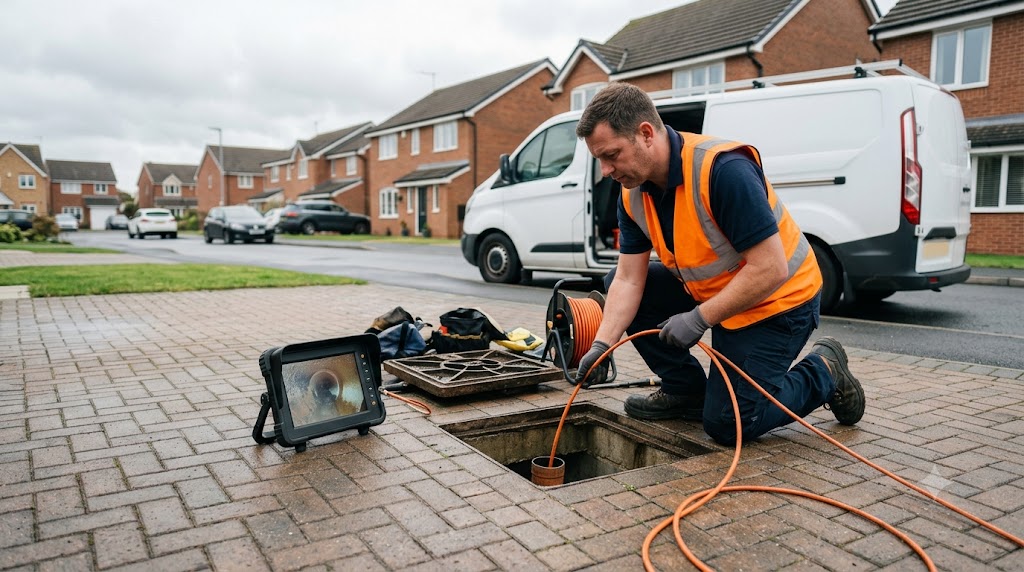
Your drain got cleared last month. The engineer departed, the water started flowing again, and you assumed that you were safe from this issue. Three weeks later, however, your kitchen sink is moving slowly again, and the smell has returned. In the back of your mind, you knew that you were about to make another phone call. The only question that is not asked at that moment is the only question that really needs to be answered – why does it continue to happen? Drainage companies are not only focused on clearing drains; rather, they need to make sure that the drain remains clear, and the distinction is greater than you think.
Why Unblocking Drainage Is Not the Same as Replacing It?
A free-flowing drainage does not always mean that the drainage problem is solved. Although the cause of the clog might have moved from one point to another, the pipe itself which allowed the formation of fats remains the same. The tiny crack that allows tree roots into the drainage remains untouched, and the part of the drainage that lacks its downward flow continues to accumulate standing water after every use.
Reactive drain work treats the symptom. Professional drainage work goes after the cause. Repeat callouts, emergency repairs, and eventually serious structural failures all trace back to systems that were cleared but never properly understood. Drainage companies that provide services with a truly long-term perspective work based on an entirely different philosophy, which involves finding the root cause and fixing the problem for good.
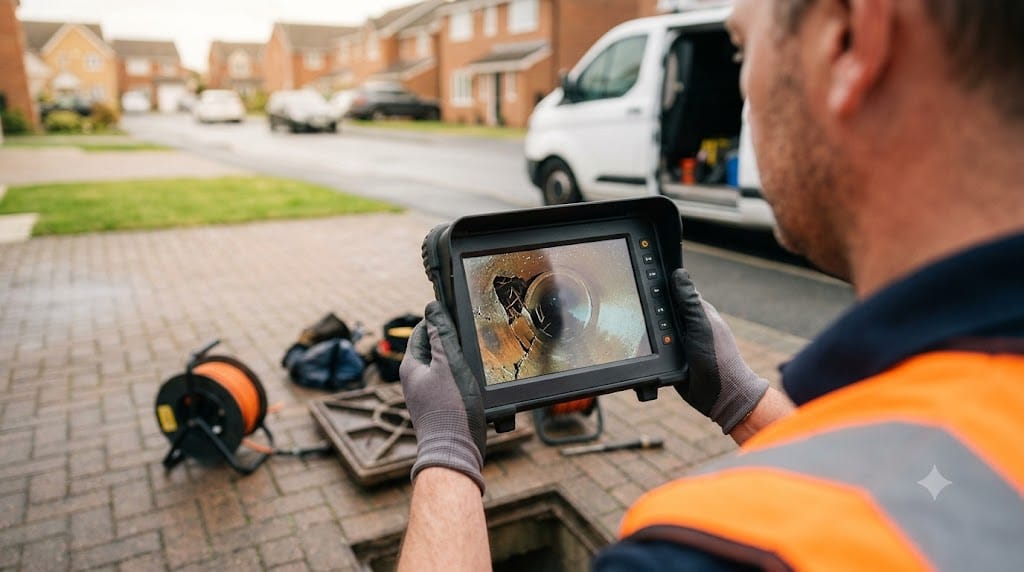
What Is Found During a CCTV Drain Survey?
Before any cleaning or repair can be recommended with confidence, an engineer needs to see inside the pipe. Drain surveying using CCTV camera equipment is the starting point for every well-run drainage job, not a premium add-on.
A CCTV drainage survey Liverpool and across all service areas feeds a high-resolution camera through the drainage line and produces a recorded view of the pipe’s internal condition. The survey is not just looking for the obvious blockage. It is reading the pipe as a whole structure, and what it finds shapes every decision that follows.
| What the Survey Finds? | Why Does It Matter? |
| Hairline cracks in the pipe wall | Will widen under water pressure or root growth |
| Displaced or offset joints | Entry points for tree roots and groundwater |
| Sagging sections, known as pipe bellies | Debris collects here rather than flowing away |
| Early root intrusion | Far cheaper to address now than after fracture |
| Visible corrosion or deterioration | Signals pipework approaching the end of its life |
That footage becomes a diagnostic record. The engineers then pinpoint each flaw accurately, determine whether repair, relining or replacement is required, and formulate a maintenance strategy based on what actually needs to be done, rather than what they think ought to be done.
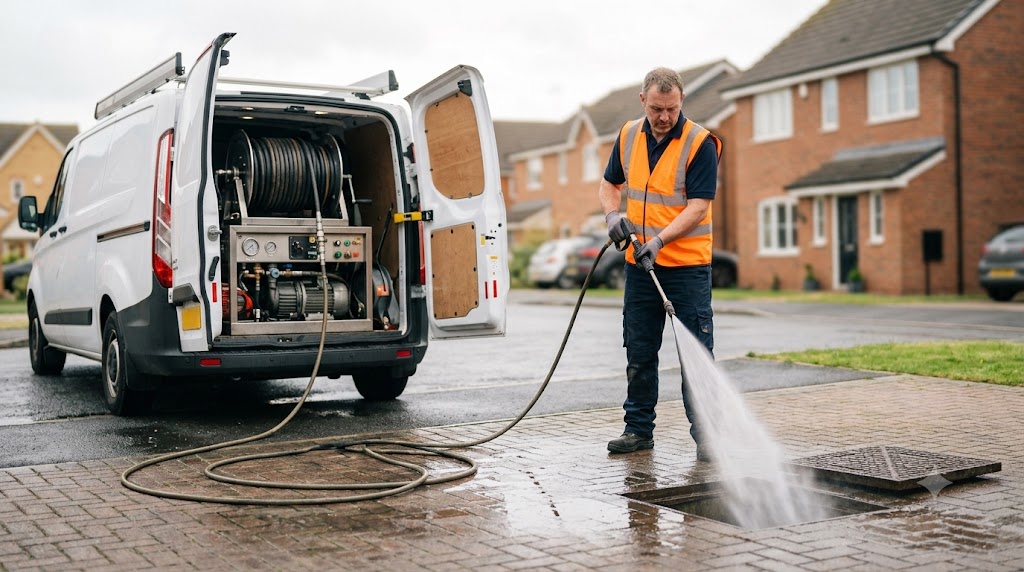
High Pressure Jetting – The Difference between Clean and Clear
Having completed the survey, the next phase, in the majority of cases, involves cleaning. The process used determines whether the outcome will prove permanent or temporary. Chemical drain cleaners purchased from the average supermarket create a temporary passage through clogs without breaking down the grease layer inside the pipes. Regular use of the same type of product over time can also cause gradual corrosion of the pipe itself.
Professionally operated drain services near me throughout the UK employ high-pressure water jetting as their method of choice.
| What Jetting Removes? | Where Does It Typically Accumulate? |
| Baked-on grease and fat deposits | Kitchen drain pipes and pipe junctions |
| Mineral scale from hard water | Throughout domestic pipework over time |
| Biological slime and biofilm | Any pipe carrying regular organic waste |
| Compacted silt and debris | External gullies and surface drainage channels |
A pipe restored through jetting flows close to its original capacity. A pipe having a hole made through the obstruction flows momentarily until the exact same situation creates the exact same obstruction again. The process of jetting is totally mechanical without using any chemicals at all.
The Two Causes That Keep Coming Back
Two underlying problems account for most recurring drain failures across UK properties, and neither responds to clearing alone.
Tree Root Intrusion
Roots follow water. An extremely thin crack that exists between two pipes will be sufficient for the root to enter. As soon as the root has entered, it will grow until it causes restrictions before fully blocking the line. When such a blockage has been cleared and without plugging the entry area, then the same root will continue its growth from the point where it stopped. Drainage companies Liverpool determine root penetration in terms of camera survey. They will then decide how to address the situation in terms of pipe relining to close the pipe joint, root cutting with pipe relining, or even pipe section replacement. Close the entry point, not just clear the consequence.
Displaced Joints and Structural Damage
Pipes shift over time. Ground movements, soil settlement, and age all play a part in joint separations, section sagging, and wall cracks. Jetting a structurally faulty pipeline only offers temporary relief; pipe relining and pipe replacement provide a solution. Trenchless pipe relining, whereby an epoxy-coated lining is installed in the existing pipeline using cure-in-place technology, is commonly undertaken by reputable drainage companies because it does not involve any digging. Garden and driveway surfaces remain intact.
Preventative Maintenance vs. Reactive Maintenance
For commercial properties, older residential buildings, and anywhere with a history of repeat blockages, reactive maintenance is an expensive approach. The emergency callout, the disruption, and the repair cost all land at once. Scheduled inspections and cleaning cycles, by contrast, catch developing issues before they force that situation. A well-structured plan accounts for pipework age and material, past blockage history, usage volume, and external factors like tree coverage and surface water exposure.
Mersey Rod, with over 25 years of drainage experience across Liverpool, Wirral, Warrington, and the wider North West, works with residential and commercial clients on exactly this basis. Holding Water Jetting Association certification and full CHAS accreditation, their engineers deliver CCTV surveys, high-pressure jetting, pipe relining, and drains Liverpool maintenance, with pricing fixed and confirmed before work begins.
A callout avoided is always cheaper than a callout managed. For commercial operators particularly, a drain emergency mid-service does not just cost the repair fee; it costs the hours of disruption around it.
When the Problem Comes From Outside the Building?
Not every drainage failure starts inside the property. Surface water pooling in yards and driveways, blocked external gullies, and inadequate surface drainage all feed into internal drain overload, particularly during heavy rainfall. Experienced drain unblocking in Wirral and the surrounding area treat external drainage as part of a complete assessment rather than a separate concern.
The Environment Agency’s National Assessment of Flood Risk for December 2024 states that about 4.6 million out of 6.3 million properties at risk in England are at risk from flooding by surface water, when there is too much rainfall for drainage systems to cope with. The critical factor for those properties is the drainage route from where the rain falls to where it leaves the property.
External drainage involves gully cleaning, tankering of silt, the assessment of existing surface channels, and where additional capacity is required. Where a yard continually floods without a clear blockage, the problem is unlikely to be just the gully; the engineers will investigate the entire drainage route before making a recommendation.
The Warning Signs That Are Worth Taking Action Upon Early
These signs may seem minor in isolation. Persisting across more than a few days, or appearing more than once in a short period, they point to something that costs more to deal with later than it does now.
| Warning Sign | What It May Indicate? |
| Drain running slowly for more than a week | Developing blockage or partial structural failure |
| Smell returning within days of a DIY attempt | Biofilm or a structural issue deeper in the system |
| Gurgling from pipes when water drains elsewhere | Air displaced by a blockage further along the line |
| Visible dampness near underground pipework | Cracked or displaced joint allowing water to seep |
| Garden staying waterlogged after dry weather | Collapsed or blocked surface drainage underneath |
A CCTV survey with drainage companies Liverpool at the first sign of recurring trouble costs a fraction of a collapsed drain repair. And a sewer backup inside a property, the outcome of leaving these signs unaddressed long enough, is considerably more disruptive than anything a survey visit involves.
Mersey Rod provides 24/7 emergency drain response alongside planned drain services near me across Merseyside, drain unblock in Wirral, and neighbouring regions. Rated the UK’s top drainage company on Trustpilot, their no-fix-no-fee policy means no charge if the blockage cannot be cleared. Reach the team on 0330 043 9867.
What Property Owners Can Do Between Visits?
Professional inspection and cleaning handle the structural work. Between visits, consistent habits slow the rate at which problems develop:
- Never pour cooking fat, oil, or grease down a kitchen drain.
- Fit a drain strainer in kitchen and bathroom sinks to catch solid debris.
- Flush only toilet paper; products labelled “flushable” frequently are not in practice.
- Clear external drain covers of leaf accumulation, particularly in autumn.
- Act on slow drainage within a few days rather than waiting for a full blockage.
None of these replaces professional drain surveying, but they extend the intervals between necessary interventions considerably.
The Drain That Comes Back Is Trying to Tell You Something
Most property owners get a drain cleared and move on. What distinguishes professional drainage engineers is that they sort out the blockage of a drain, find out why it blocked in the first place, and take care of it. This is the change in perspective which distinguishes between a drain which functions normally and one that needs maintenance every few months. It is possible to use technology to view the inside of a pipe, clean it, fix it without digging up the garden, and even maintain it with regular monitoring. If a drain has blocked at least twice in the last year, there is something wrong with the maintenance strategy.
What Property Owners Can Do Between Visits?
Professional inspection and cleaning handle the structural work. Between visits, consistent habits slow the rate at which problems develop:
- Never pour cooking fat, oil, or grease down a kitchen drain.
- Fit a drain strainer in kitchen and bathroom sinks to catch solid debris.
- Flush only toilet paper; products labelled “flushable” frequently are not in practice.
- Clear external drain covers of leaf accumulation, particularly in autumn.
- Act on slow drainage within a few days rather than waiting for a full blockage.
None of these replaces professional drain surveying, but they extend the intervals between necessary interventions considerably.
The Drain That Comes Back Is Trying to Tell You Something
Most property owners get a drain cleared and move on. What distinguishes professional drainage engineers is that they sort out the blockage of a drain, find out why it blocked in the first place, and take care of it. This is the change in perspective which distinguishes between a drain which functions normally and one that needs maintenance every few months. It is possible to use technology to view the inside of a pipe, clean it, fix it without digging up the garden, and even maintain it with regular monitoring. If a drain has blocked at least twice in the last year, there is something wrong with the maintenance strategy.
Frequently Asked Questions
How Often Should Your Drains Get Professionally Inspected?
As a rule for those without any repeat history, every two or three years is good practice. For houses that have old clay pipes, dense surrounding tree cover, or repeated problems with clogging, annual inspection is advised.
What’s The Difference Between Drain Jetting And Drain Rodding?
Rodding clears away or moves the blockage. Jetting cleanses the full internal pipe surface by scrubbing off the scale, grease, and biofilm, not just making a temporary opening through the clog. In the case of a repeat-blockage drain, jetting is a more permanent solution.
Can Tree Roots Actually Damage A Drain Pipe?
Yes. Unresolved root penetration will eventually damage the pipe. CCTV investigation will help identify this issue early enough to repair it, either by fixing the joint or re-lining the pipe.
Does A CCTV Drain Survey Entail Excavating The Garden?
No, the camera uses the pre-existing entry points like inspection chambers. There is no need to dig up the garden when conducting a drain survey.
What Causes Blockages In Drains Within UK Houses?
The most frequent causes are fat and grease build-up, non-flushable wipes, and roots of trees. These three issues are all identifiable from a CCTV drain survey.