
No Comments
High-Pressure Drain Jetting: Cost & What to Expect
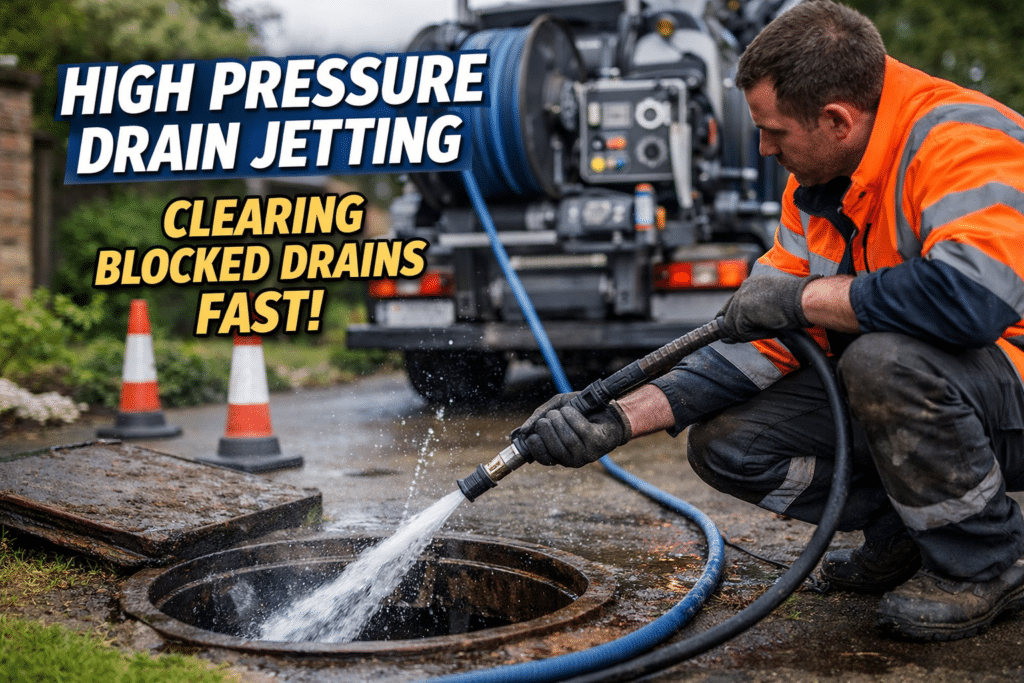
Blocked drains rarely happen at a convenient time. A kitchen sink that refuses to empty or an overflowing external gully can quickly disrupt daily life. When standard methods fail, many property owners turn to High Pressure Drain Jetting to restore full flow quickly and safely.
This method has become one of the most effective ways to clear stubborn pipework. It delivers fast results, protects pipe integrity, and helps prevent repeat issues when carried out by experienced engineers.
What Is High Pressure Drain Jetting?
High Pressure Drain Jetting uses a specialist machine that pumps water through a reinforced hose at extremely high force. A precision nozzle directs powerful jets of water forwards and backwards, breaking apart blockages while flushing debris out of the system.
Unlike basic rodding, which punches a hole through an obstruction, jetting cleans the full internal diameter of the pipe. The water pressure strips away grease deposits, soap residue, silt, scale, wipes, and other build-up that clings to pipe walls.
How high pressure drain jet systems work
Engineers feed a flexible hose into the affected drain. The machine then propels water through a high pressure drain jet, which scours the interior surface of the pipe. Rear-facing jets pull the hose forward while clearing loosened debris back towards the access point.
This approach allows technicians to reach deep blockages within underground pipework, soil stacks, and external drainage lines without excavation.
The difference between jetting and traditional rodding
Drain rods remain useful for simple, localised obstructions. They work well when debris sits close to the surface and access is straightforward. However, rodding often leaves residue behind, which can trigger further blockages.
Jetting provides a more thorough clean. It removes the cause of the problem rather than creating a temporary gap through it. For recurring issues, heavy grease build-up, or compacted waste, jetting offers a more reliable solution.
When drain jetting is recommended
Drainage specialists typically recommend jetting when:
- Blockages keep returning in the same pipe
- Grease, fat, or scale has accumulated over time
- Multiple fixtures drain slowly across the property
- External drains overflow during rainfall
In many cases, engineers carry out a CCTV inspection first to confirm the condition of the pipework. This ensures the system can withstand the required pressure.
Why Property Owners Choose High Pressure Drain Jetting
Drain problems create stress, particularly when water backs up into sinks, showers, or outdoor areas. Fast resolution matters, yet long-term reliability matters just as much.
Jetting addresses both. It restores full flow quickly, often within a single visit. It also cleans the pipe walls thoroughly, which reduces the likelihood of another blockage forming soon after.
Clearing stubborn blockages
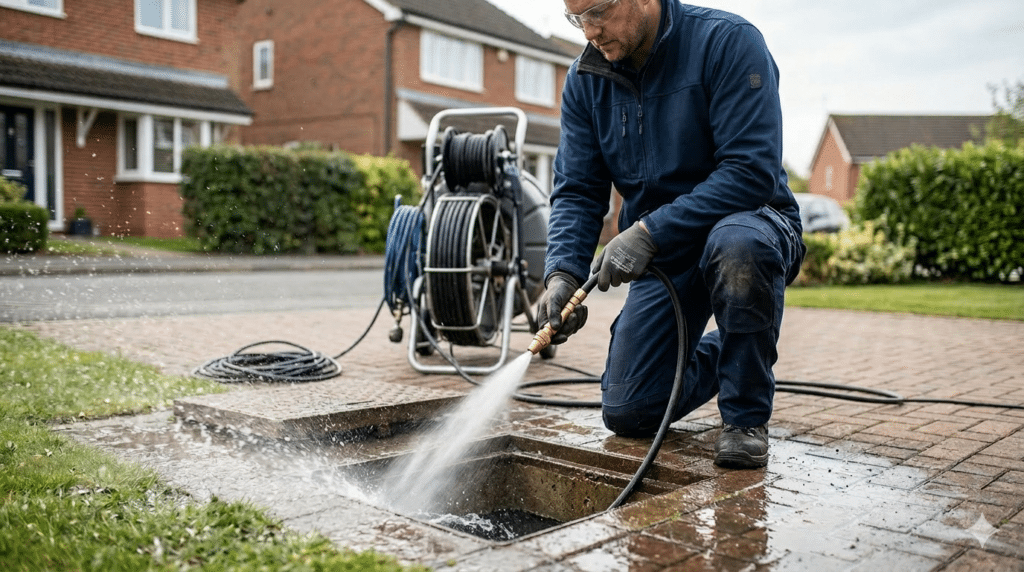
Wipes, sanitary products, congealed fats, and compacted debris form dense obstructions. Standard methods may shift part of the blockage but leave solid material behind. High-pressure water breaks these materials down and flushes them away.
Removing grease, scale, and debris build-up
Kitchen drains often accumulate layers of grease mixed with food particles. Over time, this narrows the internal pipe diameter. Jetting strips these layers away, returning the pipe closer to its original capacity.
Commercial kitchens, restaurants, and food preparation areas particularly benefit from this method due to frequent grease discharge.
Preventing recurring drainage issues
Many recurring problems stem from residue left behind after partial clearance. A full internal clean reduces the surface for new debris to cling to. Regular maintenance jetting can also support long-term pipe health in high-usage environments.
Mersey Rod operates with a focus on prompt response, transparent pricing, and reliable service, reflecting its mission to provide cost-effective drainage solutions with customer satisfaction at the centre of every job . Experienced engineers assess each situation carefully, ensuring the chosen method suits the condition of the pipework.
Signs a Drain Needs Jetting
Some warning signs suggest that basic clearance methods may not resolve the issue fully.
Slow-draining sinks and baths
When water drains sluggishly across multiple fixtures, build-up within the main line may restrict flow. Surface cleaning rarely addresses this deeper obstruction.
Persistent foul odours
Trapped organic waste within pipe walls produces unpleasant smells. A thorough internal clean removes the source rather than masking it.
Repeated blockages in the same pipe
If the same drain blocks every few weeks, residue likely remains inside the system. Jetting removes that hidden layer.
External drain flooding
Water pooling around inspection chambers or gullies often signals a restriction further along the line. Swift intervention prevents further property damage.
The High Pressure Drain Jetting Process Explained
When drainage engineers attend a property, they focus on accuracy before action. Proper assessment protects the pipework, reduces disruption, and ensures the correct pressure setting for the job.
Initial inspection and assessment
Engineers begin by identifying the location and likely cause of the blockage. In some cases, they use CCTV equipment to inspect the pipe internally. This confirms whether grease build-up, foreign objects, scale, or tree roots restrict the line.
The inspection also checks for cracks, displaced joints, or collapsed sections. Jetting suits most modern pipe systems, yet damaged pipework may require repair before high-pressure cleaning begins.
Equipment setup and safety checks
Technicians position the jetting unit safely, often outside the property near an inspection chamber. They select a nozzle suited to the blockage type, then test pressure levels before insertion.
Protective measures prevent splashback and contain debris. Experienced operators adjust pressure carefully to clear obstructions without stressing the pipe walls.
The jetting procedure step by step
The hose enters the drain through an access point. Once activated, the pressurised water drives the hose forward, breaking apart obstructions while flushing debris backwards.
Engineers move the hose gradually through the line to ensure a full internal clean. They may repeat the process to remove stubborn deposits fully.
The result is a pipe restored close to its original internal diameter, free from compacted waste and residue.
Post-clearance checks and recommendations
After clearing the blockage, technicians confirm that water flows freely through the system. They may conduct a follow-up camera inspection to verify the condition of the pipework.
Where build-up appears likely to return, they may recommend routine maintenance as part of ongoing Drain Unblocking Services. Preventative work often proves more cost-effective than repeated emergency call-outs.
How Much Does High Pressure Drain Jetting Cost?
Costs vary depending on several practical factors. Transparent pricing remains important to customers, particularly during urgent situations.
Factors that influence pricing
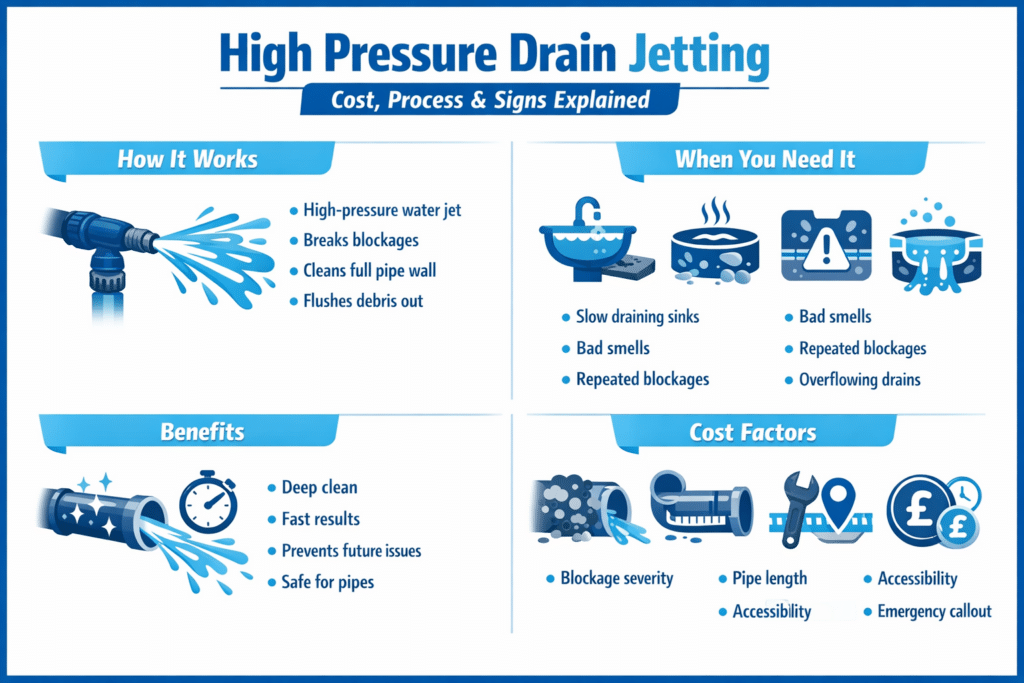
The main influences include blockage severity, pipe length, access points, and property type. A simple domestic obstruction in an accessible chamber usually costs less than a deep underground blockage beneath hard landscaping.
Time on site also affects price. Straightforward cases may take under an hour, whereas complex commercial systems require longer investigation and cleaning.
Also Read: – How Much Should a Drain Repair Cost?
Domestic vs commercial drain systems
Domestic systems typically feature smaller pipe diameters and shorter runs. Commercial properties often contain larger networks serving kitchens, washrooms, and production areas. These systems demand more extensive cleaning, which influences overall cost.
Restaurants, care homes, and industrial units often benefit from scheduled maintenance jetting to manage grease discharge and heavy usage.
Accessibility and severity of blockage
Restricted access increases labour time. Lifting heavy covers, navigating confined areas, or working around fixed structures adds complexity.
Severely compacted waste also extends clearance time. Dense grease, wipes, and scale deposits require multiple passes to restore full flow.
Emergency call-out considerations
Out-of-hours attendance may carry an additional charge due to staffing and rapid response requirements. Many customers search online for a Drain Service Near Me when facing urgent flooding or sewage back-up. Choosing a provider that offers fixed pricing reduces uncertainty during these situations.
Mersey Rod prioritises clear communication, reliable attendance, and honest pricing in line with its customer-focused values. This approach helps property owners make informed decisions without hidden surprises.