
No Comments
Grease Trap Clean Out Explained by Drain Surveying Experts
Commercial kitchens across the UK rely on grease traps to prevent fats, oils, and grease from entering the main drainage system. When these systems fail, the disruption can spread quickly from a single sink to an entire building. Drainage specialists often see the aftermath, from internal blockages to external sewer restrictions, all caused by poor grease management.
A planned grease trap clean out protects pipework, maintains hygiene standards, supports compliance with Environmental Health requirements. Drain survey professionals regularly inspect systems where neglected interceptors have allowed hardened grease to travel downstream, creating avoidable repair costs.
What Is a Grease Trap and Why It Matters
Grease traps sit between kitchen waste outlets and the main drainage line. They slow wastewater flow, allowing fats and oils to cool and separate before the water continues into the sewer network
How grease traps work in commercial kitchens
When hot wastewater enters the chamber, grease rises to the surface while heavier solids settle at the base. The remaining water exits through an outlet positioned between these two layers. Over time, the top and bottom layers thicken. Without routine removal, the chamber loses capacity, performance drops.
High-output kitchens, particularly in hospitality settings, produce significant volumes of grease each day. Even well-managed operations experience build-up. Routine servicing keeps separation effective, prevents internal corrosion, protects downstream pipework.
The role of fats, oils, and grease in drainage issues
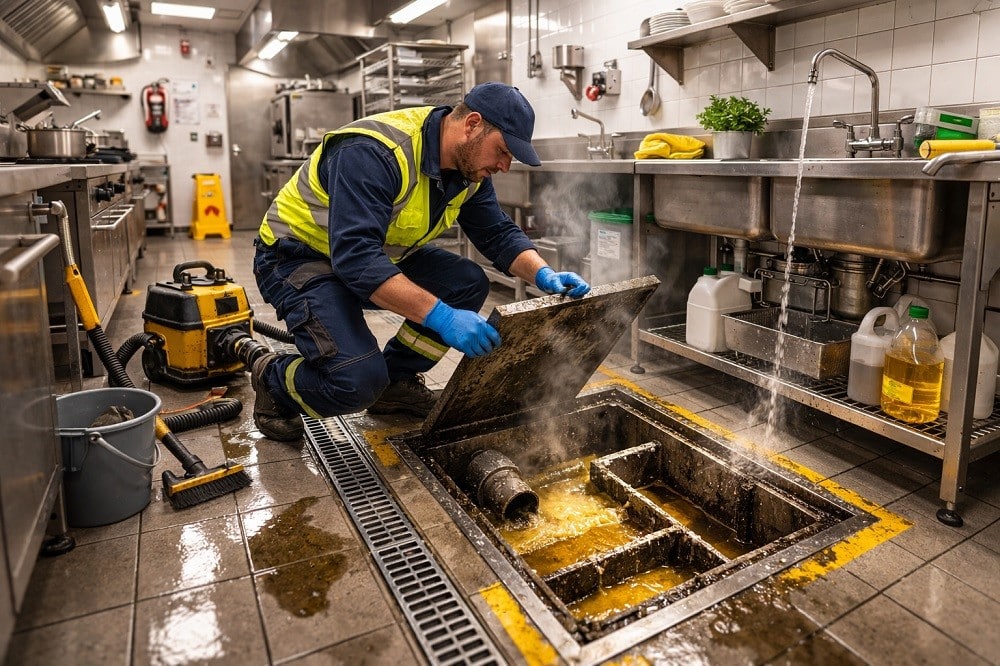
Fats, oils, and grease do not dissolve in water. As they cool, they solidify along pipe walls. Drainage engineers frequently encounter pipe interiors narrowed by thick deposits that resemble candle wax. These restrictions slow flow, trap debris, and create conditions for full blockages.
Left unchecked, grease can extend beyond the premises into shared sewers. Local authorities treat these incidents seriously due to the risk of pollution and environmental harm.
Why regular grease management protects drainage systems
Consistent maintenance prevents grease from escaping the interceptor. It also reduces strain on pumps, valves, and inspection chambers. Businesses that implement scheduled servicing typically avoid emergency callouts, reputational damage, and operational downtime.
Drain Surveying often identifies grease as a root cause when investigating recurring drainage faults. CCTV inspections reveal whether build-up remains localised within the trap or has migrated further along the system.
What Happens During a Grease Trap Clean Out
Professional contractors follow a structured approach to ensure safe removal, compliant disposal, full system restoration.
Initial inspection and safety checks
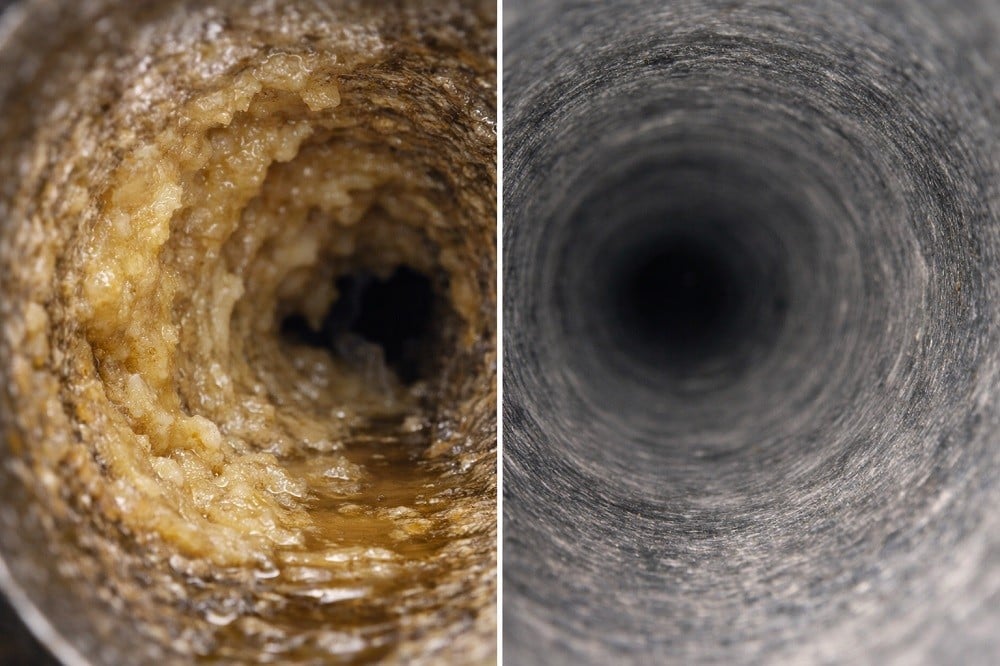
Engineers begin by assessing the condition of the chamber. They check access covers, ventilation, and structural integrity. Gas detection equipment may be used in confined spaces to ensure safe entry.
The surrounding area is prepared to prevent contamination of food preparation zones. Protective equipment is worn throughout the process.
Removing accumulated waste and hardened grease
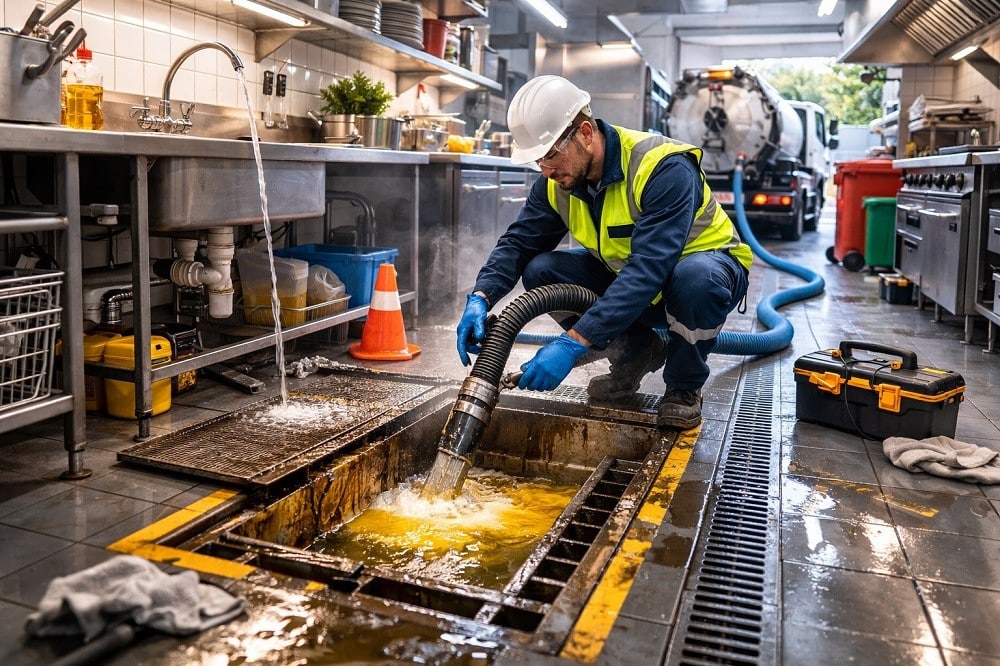
Specialist vacuum tankers extract liquid waste, floating grease, and settled solids. In smaller systems, manual removal may be required to clear hardened layers adhered to chamber walls.
This stage restores the trap’s operating capacity. A thorough wash-down removes residual deposits that could accelerate fresh build-up.
Proper disposal in line with UK regulations
Collected waste must be transported and disposed of at licensed facilities. Reputable contractors provide documentation confirming lawful handling of grease waste, supporting environmental compliance.
Poor disposal practices expose businesses to penalties. Working with experienced teams ensures full traceability.
System checks before reinstatement
Before resealing the chamber, engineers inspect inlet and outlet pipes for early signs of restriction. They confirm that baffles, flow controls, and internal components remain secure. Any damage is reported with clear recommendations.
At this stage, contractors may advise on cleaning frequency based on observed grease levels, kitchen output, historical drainage performance.
Signs a Grease Trap Needs Attention
Grease traps rarely fail without warning. Early indicators often appear within kitchen operations.
Slow drainage in sinks and floor gullies
When wastewater drains slowly, grease may have reduced internal capacity. Backups can develop during peak service periods, disrupting workflow.
Persistent odours in food preparation areas
As trapped waste decomposes, unpleasant smells escape through covers or connected pipework. Odour issues often signal that the chamber has exceeded safe grease levels.
Overflow risks and compliance concerns
If grease accumulates beyond recommended limits, wastewater may bypass separation entirely. Overflow events create hygiene risks, increase the likelihood of enforcement action from local authorities.
Increased strain on pipework
Recurring internal blockages suggest grease has travelled beyond the interceptor. At this stage, a simple clean may not resolve the wider issue. Drainage specialists may need to assess downstream infrastructure for restrictions.
Drain Unblocking Services frequently attend commercial kitchens where grease has solidified within lateral pipes, inspection chambers, or shared connections. Addressing the source remains essential to prevent repetition.
The Link Between Grease Trap Maintenance and Drain Health
Drainage systems function as a network. When one component underperforms, pressure shifts elsewhere. A poorly maintained interceptor often triggers problems that appear unrelated at first glance.
How blocked grease traps lead to wider system failures
When grease escapes the chamber, it enters branch lines, then main runs. As it cools, it bonds to pipe walls. Debris carried in wastewater adheres to the sticky surface, gradually narrowing the internal diameter.
Engineers carrying out CCTV inspections regularly find long sections of pipe lined with thick grease deposits. In severe cases, flow reduces to a narrow channel through the centre of the pipe. Wastewater then backs up during peak usage, affecting multiple fixtures.
External drains can also suffer. Interceptors that overflow allow grease to reach inspection chambers and shared sewers, increasing the likelihood of large-scale blockages.
The importance of professional Drain Surveying
When drainage issues persist after cleaning, Drain Surveying provides clarity. High-resolution CCTV equipment allows engineers to trace grease migration, identify structural damage, pinpoint collapsed sections, or detect displaced joints.
Survey reports give property managers clear evidence of system conditions. They outline problem locations, quantify build-up, and recommend remedial action. This approach removes guesswork, supports informed decisions.
Surveying also plays a preventative role. Scheduled inspections confirm that maintenance programmes remain effective, highlighting early-stage restrictions before they escalate.
Preventing emergency callouts with scheduled servicing
Reactive maintenance often costs more than planned servicing. Emergency visits disrupt trading hours, affect staff workflow, create reputational risks.
A structured cleaning schedule reduces uncertainty. High-volume kitchens may require monthly servicing, smaller operations less frequently. Usage patterns, menu type, operating hours all influence frequency.
When businesses partner with experienced contractors, they gain consistency. Records of each visit build a service history, making it easier to adjust intervals based on real data rather than assumption.
Professional Grease Trap Cleaning Services vs In-House Cleaning
Some businesses attempt internal cleaning. Surface skimming may remove visible grease, yet deeper layers often remain.
Why specialist equipment makes a difference
Vacuum tankers remove both liquid waste and compacted solids. High-pressure washing clears internal surfaces thoroughly, restores full chamber capacity. Manual methods rarely achieve the same result.
Engineers also inspect internal components during servicing. They identify cracks, corrosion, loose baffles, blocked outlets before these issues compromise performance.
Health and safety considerations
Grease traps contain decomposing waste, harmful bacteria, potentially hazardous gases. Without proper equipment, exposure risks increase.
Professional teams follow strict procedures. They use protective clothing, gas detection equipment, and controlled waste handling processes. This reduces health risks within the kitchen environment.
Cost implications of neglected systems
Attempting to reduce maintenance costs often leads to greater expense later. Pipe replacements, excavation works, business interruption can outweigh routine servicing fees.
When grease migrates beyond the interceptor, cleaning alone may no longer suffice. Engineers may need to jet downstream pipework, remove hardened deposits from inspection chambers, or restore partially blocked laterals.
At this stage, a full grease trap clean out forms part of a wider corrective plan rather than a standalone task.
When a Grease Trap Issue Requires Drain Unblocking Services
Not every blockage originates within the chamber itself. Grease that escapes can travel significant distances.
External pipe blockages caused by grease build-up
As grease cools within underground pipework, it bonds with wipes, food debris, and scale. This combination forms dense obstructions that standard plunging cannot shift.
Drain Unblocking Services deploy high-pressure water jetting to break apart these accumulations. In more severe cases, mechanical cutting tools may be required to restore flow.
Interceptor and sewer connection problems
Some sites include large interceptors serving multiple units. If these systems overflow, grease may reach shared connections. This can create disputes between neighbouring businesses when blockages occur.
Professional assessment establishes origin, extent, responsibility. Clear reporting prevents ongoing disagreement.
Coordinated response from drainage professionals
Complex cases often require a combined approach. Cleaning the chamber, jetting affected pipework, conducting CCTV surveys, verifying flow restoration all form part of the response.
Integrated service delivery reduces repeat incidents. It also ensures that corrective work addresses cause, not just symptoms.
How Often Should a Grease Trap Be Cleaned?
Cleaning frequency depends on kitchen output, food type, trap size, local authority guidance.
Factors that influence cleaning frequency
Sites preparing fried foods, roasted meats, and rich sauces generate higher grease volumes. Smaller traps reach capacity more quickly than larger interceptors.
Engineers assess grease depth during servicing. When grease exceeds recommended levels, cleaning intervals should shorten.
Environmental Health expectations
Local authorities expect food businesses to maintain effective grease management. Failure to do so can lead to enforcement action, particularly if blockages affect public sewers.
Documented servicing demonstrates compliance, supports inspections.
Creating a maintenance schedule that works
Effective schedules balance cost control with operational reliability. Regular assessment, accurate record keeping, professional advice support this balance.
Mersey Rod provides structured servicing programmes designed around site requirements. Experienced engineers combine inspection, cleaning, reporting to maintain system integrity across commercial properties.
Grease rarely causes immediate failure. It accumulates gradually, then restricts flow without warning. Proactive management prevents disruption, protects drainage infrastructure, and supports consistent kitchen operations.
Real-World Findings from Drainage Engineers
Engineers who attend commercial sites often see patterns repeat. A kitchen operates without scheduled maintenance, minor odours begin to surface, sinks start draining more slowly during busy periods. Staff may attribute the issue to food debris or heavy usage. A closer look usually tells a different story.
CCTV inspections frequently reveal that grease has already travelled beyond the interceptor. In some cases, pipe walls appear heavily lined several metres downstream. Flow continues through a narrow channel until a single busy service pushes the system past its limit.
Early intervention avoids this escalation. When engineers carry out routine servicing, they measure grease depth, check internal components, and confirm that separation remains effective. This approach provides certainty rather than reacting once problems become visible.
Compliance, Record Keeping, and Reputation
Environmental Health inspections form part of routine oversight for food businesses. Inspectors may request evidence of grease management practices, including service records and waste transfer documentation.
Maintaining clear records demonstrates responsible operation. It shows that the business monitors waste, prevents pollution, and protects shared infrastructure. In competitive hospitality environments, operational reliability also protects reputation. Customers rarely see drainage systems, yet they quickly notice odours or service disruption.
Professional contractors supply detailed reports after each visit. These documents confirm cleaning dates, outline observations, and note recommendations. Over time, this record builds a clear maintenance history that supports planning and budgeting.
The Cost of Delay
Grease accumulation develops gradually. Operators may delay servicing if the system appears to function. That decision can carry risk.
Blocked external drains often require high-pressure jetting, additional labour, possible excavation if structural defects exist. In extreme cases, prolonged grease exposure accelerates corrosion within metal pipework, increasing the likelihood of replacement works.
Lost trading hours compound these costs. A kitchen unable to operate during peak periods loses revenue immediately, may face cancelled bookings, damaged reputation.
By contrast, planned servicing provides predictable expenditure. Cleaning intervals reflect usage, trap size, and historical performance. Engineers adjust schedules based on evidence gathered during visits.
Choosing an Experienced Contractor
Not all service providers operate to the same standard. Businesses should look for contractors who:
- Provide documented waste disposal, detailed service reports, CCTV capability where required, transparent pricing structures.
Experience in commercial drainage matters. Engineers who regularly work within hospitality environments understand access constraints, hygiene considerations, and operational pressures.
Clear communication supports smooth service delivery. Contractors should explain findings plainly, outline risks, and recommend proportionate solutions without exaggeration.
Final Thoughts from the Field
Grease management rarely attracts attention until failure occurs. Drainage professionals consistently find that routine care prevents disruption, reduces cost, and protects infrastructure.
A properly maintained interceptor supports efficient kitchen operation. Scheduled servicing, supported by inspection where required, limits grease migration, reduces emergency callouts, safeguards compliance.
For commercial premises operating at scale, prevention proves more practical than repair. Regular monitoring, professional cleaning, early identification of restrictions keep drainage systems performing as intended.